A weekend nap is a work block with unusual rules. You don’t know exactly when it starts, you don’t know when it ends, and the one thing you know for certain is that you will be interrupted. If you want to learn how to build a website during nap time, the plan has to be built around that interruption rather than hoping it won’t happen.
This article gives you a way to work in that window: one small job per nap, a two-minute setup, and a habit for stopping mid-task that lets you pick up again without rereading everything.
Why a nap window works differently than a weeknight hour
On a weeknight you can usually predict your hour. The kids are in bed, the dishes are done, and you can plan 60 minutes with some confidence. That is why the evening plan can be laid out night by night.
A nap is less reliable. It might give you 90 uninterrupted minutes or 20. It also arrives when you are rested and the house is quiet in daylight, which is a better state for work that needs clear thinking, such as writing or choosing a niche.
So the two kinds of session suit different work. Evenings suit steady, repeatable tasks that you can do half-tired. Naps suit jobs that benefit from a fresh head but can be finished in small pieces. Plan the nap around pieces, and a short nap costs you very little.
Before the nap: the two-minute setup that saves your first 15 minutes
Most of the time lost in a short window goes to starting. You open the laptop, wait for it to wake, hunt for the tab you were on, and try to remember what you meant to do. Fifteen minutes can disappear that way.
Do the setup before the nap starts, while you are getting your kid down. It takes two minutes:

- Open the laptop and plug it in, so you are not watching a battery bar.
- Open only the tabs for today’s job. Close everything else.
- Open one plain note titled “Next job” and read the first line. It tells you exactly what to do.
- Put your drink and headphones within reach.
- Check that the baby monitor or your phone’s volume is on, so you hear a wake-up without listening for it.
The “Next job” note is the important item. At the end of every session you will write it for your future self, as described below. When the nap begins, you don’t decide anything. You read the note and start.
One job per nap: a simple order for your first weekends
Trying to “work on the site” for a whole nap is vague, and vague goals get abandoned when the nap ends early. Give each nap one job small enough to finish in about 30 to 45 minutes. If the nap runs long, use the spare time to start the next job. If it runs short, you still finished something.
A sensible order for the first few naps:
- Choose your topic. Decide what your site will be about and who it is for. Write the answer in two sentences. If you are promoting Wealthy Affiliate, say which kind of reader you are talking to, such as a parent with a full-time job and little time.
- Create your free account and get the site set up. Follow the setup as it is presented to you. You do not need a technical background to do this, and you should stop when the setup is done rather than start polishing.
- Write your outline for the first article. Five or six headings, each with one line about what it will say. An outline is a good nap job because it is useful even if you stop halfway.
- Write the first half of the article. Work from the outline, one heading at a time.
- Write the second half, then read it once and publish. A published imperfect article teaches you more than a perfect draft sitting in a folder.
Each of these is a different nap. Do not combine them. The point of one job per nap is that a nap ending early never leaves you with nothing to show for it.
If you are a single dad working this around a full-time job, this order also matters for a practical reason: the early jobs ask for decisions, and decisions are easier in daylight with a quiet house. The later jobs, such as editing and formatting, fit evenings better. The related piece on how a single dad can start a side income without quitting his job covers that balance in more detail.
What to do when the nap ends at minute 20
It will happen. You will be mid-sentence and hear a noise on the monitor. Plan for it ahead of time so it doesn’t feel like a failure.
Break every job into pieces of about ten minutes. For the outline job, that might be: list the headings, write a line under the first three, write a line under the rest. For the writing job, one heading is one piece.
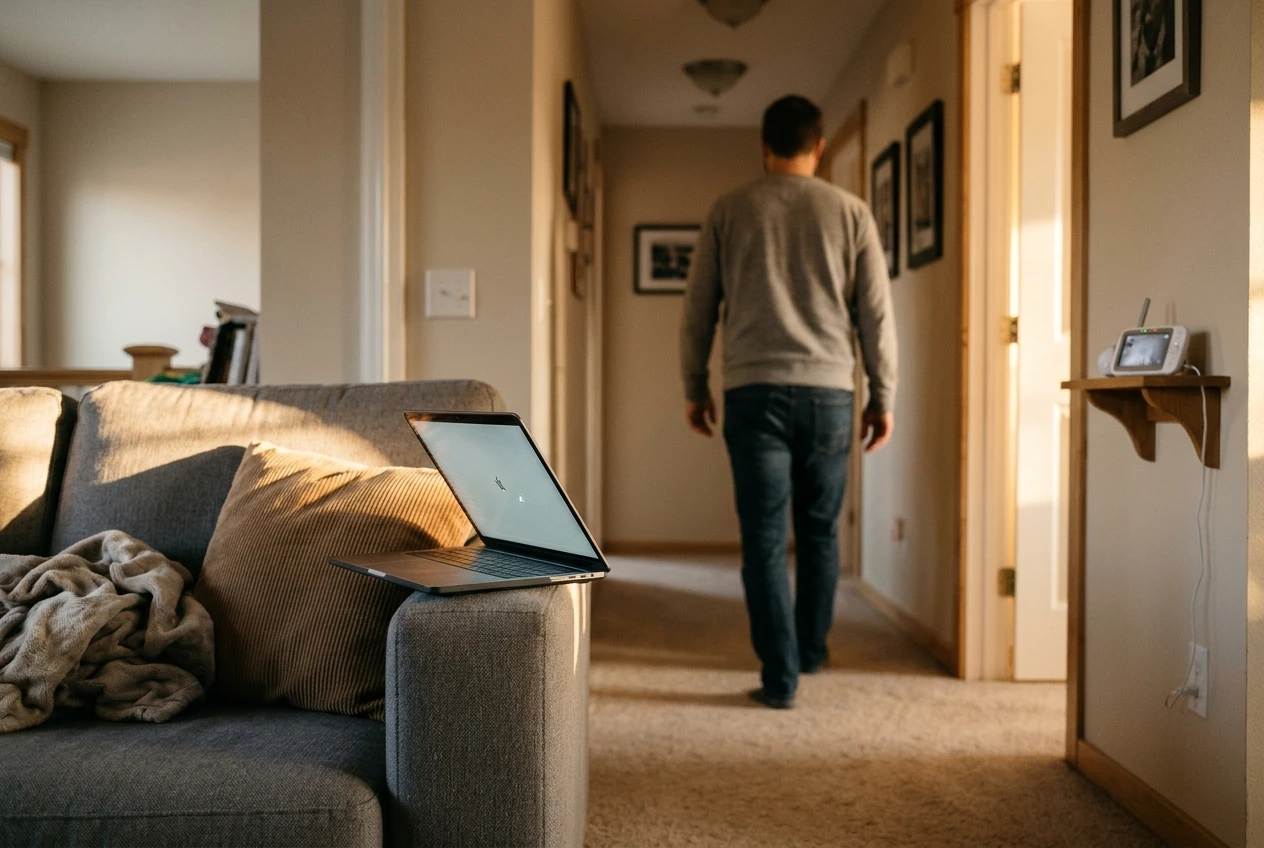
When the wake-up comes, follow this order:
- Finish the sentence you are on. Do not start a new paragraph.
- Write the stopping note (next section). This takes 60 seconds.
- Close the laptop without tidying tabs. The tabs are part of the note.
- Go get your kid. The work is saved and nothing is lost.
Twenty minutes with a clean stopping note is a successful session. You got a piece done and set up the next one. A session that ends mid-thought with no note is the real loss, because the next nap starts with confusion.
How to leave a task so you can restart without rereading everything
Rereading is the main cost of restarting. If you left off in the middle of an article, you tend to reread the whole draft to remember where you were, and half your next nap is gone.
A stopping note prevents that. Put it at the top of your “Next job” file and write three lines:
- Where I stopped: the last sentence you wrote, or the exact heading you were on.
- What comes next: one action, starting with a verb. For example, “Write two sentences under the heading about setup.”
- What I was unsure about: any question you had in your head, such as a word you wanted to check or a heading you might rename.
The third line matters more than it looks. An unresolved question lives in your head and drags on your next session. Once it is written down, you can forget it until you need it.
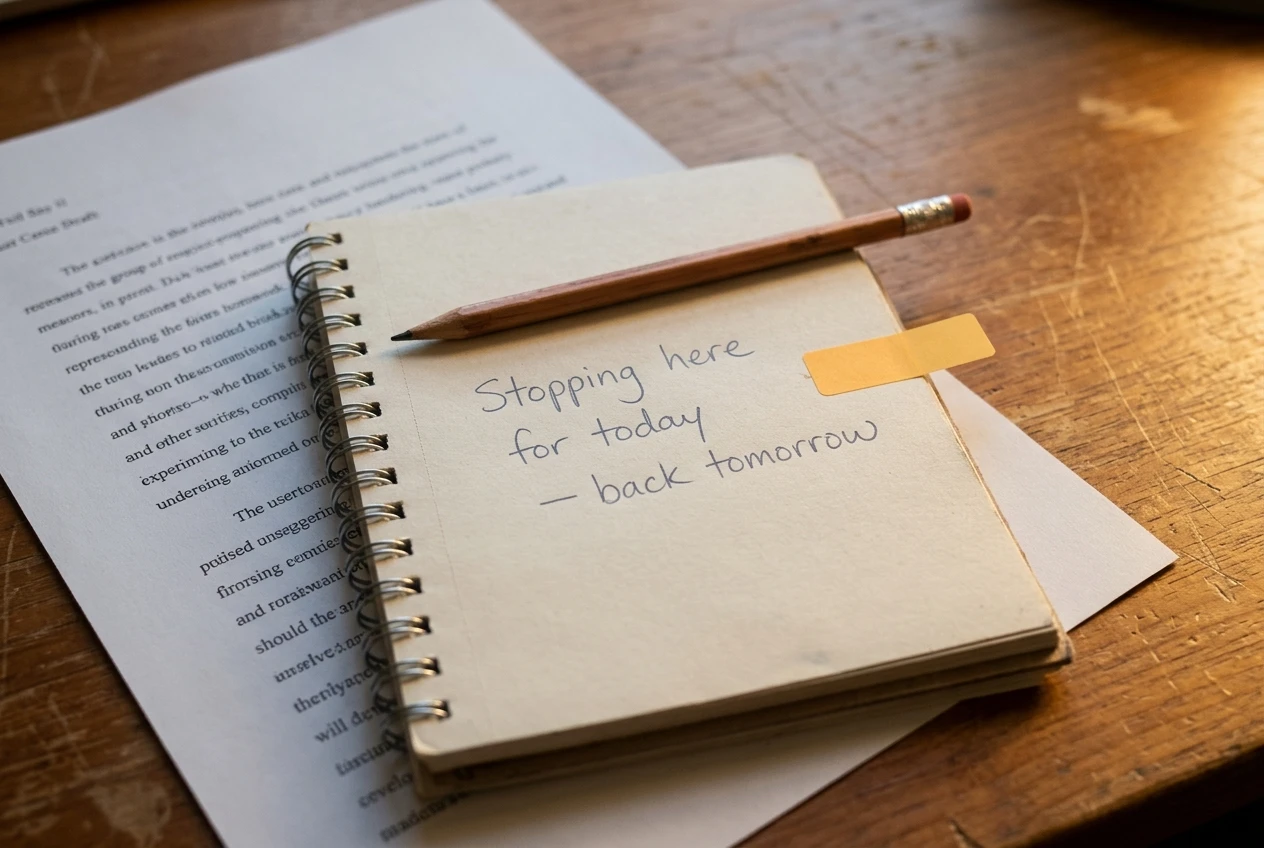
Also leave your place marked in the draft itself. Type a short marker such as “STOPPED HERE” in capital letters at the spot, so you can search for it when you return and delete it when you continue.
When there is no nap: quiet-time swaps that still count
Some weekends there is no nap. A child outgrows it, skips it, or sleeps at a different time. You may get a quiet-time stretch instead, where your kid plays on their own or watches something while you stay in the room.
Quiet time is a different kind of window. You will be interrupted often, but in short bursts, and you can’t count on deep focus. Swap the jobs to suit:

- Read instead of write. Reading a lesson or looking at a site you admire takes less concentration than drafting and can be dropped at any moment.
- Work from your phone. Jot headings, article ideas, or questions in a note. Even a voice memo of article ideas counts as progress on the outline job.
- Do small fixes. Rewrite a title, tidy a paragraph, or check that a link works. These are the tasks that survive being interrupted five times.
Keep the same “Next job” note and the same stopping habit. The rhythm is the same even when the work is lighter.
Your first month of weekends: what a realistic pace looks like, and where the evening plan picks up
Count the windows you actually get. If you have a nap or quiet stretch on both Saturday and Sunday, a month of weekends gives you roughly eight sessions. If you only get one a weekend, you have about four. Either is enough to complete the five jobs listed above, as long as you give each its own session.
A realistic first month looks like this: topic and account in the first weekend, the first article outline and a start on the writing in the second, and the first article finished and published by the third or fourth. That is a modest pace, and it does not promise any income by the end of the month. What you will have is a working site, a first article, and a habit.
This is also where weeknights come in. Weekend sessions are good for starting jobs. Evenings are good for the steady work that follows, and the 60-minute evening plan is written for that. If you leave a stopping note after a nap, your Tuesday evening starts from that note instead of from scratch, and the two schedules feed each other.
Life will interrupt this plan. A sick kid or a work deadline will cost you a weekend now and then. Open the “Next job” note when you are back, and carry on from the last line. Missing a weekend only delays the work, and it does not undo it.
Start with one nap
Start your free Wealthy Affiliate account and use your next nap to finish just the first task. Pair it with the 60-minute evening plan so your weekend and weeknight sessions build on each other.
Leave a Reply