A sick-kid week usually lands in the middle of a routine you were just getting going on. A fever on Tuesday, a night of broken sleep, a day of work to make up, and the evening hours you set aside for your site are gone. By Friday it can feel like the whole plan has fallen apart.
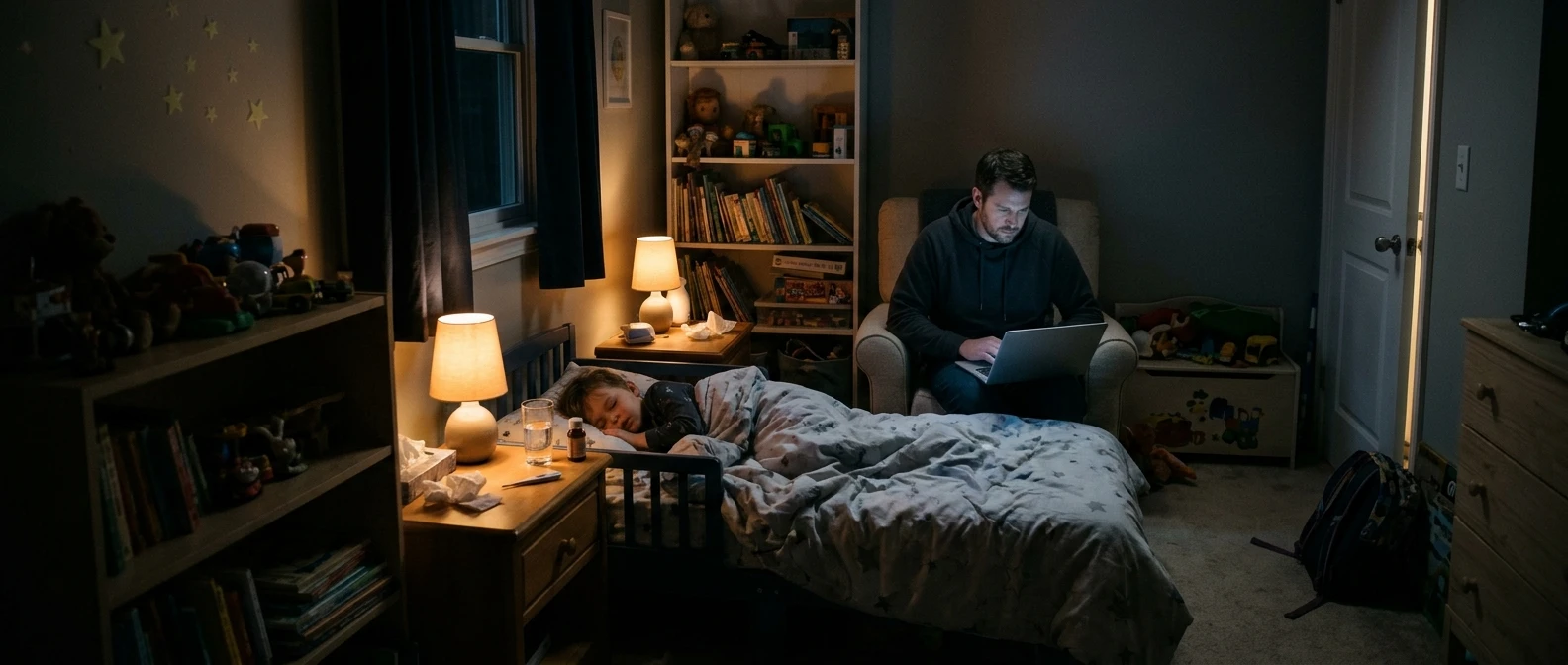
This article is a decision plan for those nights. It covers how to stay motivated when your kids are sick and you are tired, mostly by taking motivation out of the equation and replacing it with a few choices you make in advance.
Why a sick-kid week feels like it wrecks everything (and why it doesn’t)
Most people track a habit by counting consecutive days. When a sick week breaks the count, it looks like you have to start over, and starting over is the part that feels heavy when you are already tired.
The site itself does not work that way. Every page you published is still live, your domain is still yours, and the work you did before the fever is still there. A week with no new work leaves the site where it was.
What does damage is the decision to stop after the gap. A parent with a full-time job will lose some weeks to illness, school closures and bad sleep, so a routine that only works when nothing goes wrong will not last long. The better routine has a smaller version built in for the weeks that go wrong.
Low motivation on these nights usually comes from low sleep and low attention, and a pep talk does not fix either one. A rule you decided on earlier does, because you do not have to think when you are worn out.
Decide in 30 seconds: full night, tiny night, or no night
When the evening quiets down, pick one of three options. Do it once and do not reopen the question.
- Full night: Your kid is asleep and settled, any worry has passed, and you still have some energy. Run your normal plan, such as the 60-minute night-by-night routine.
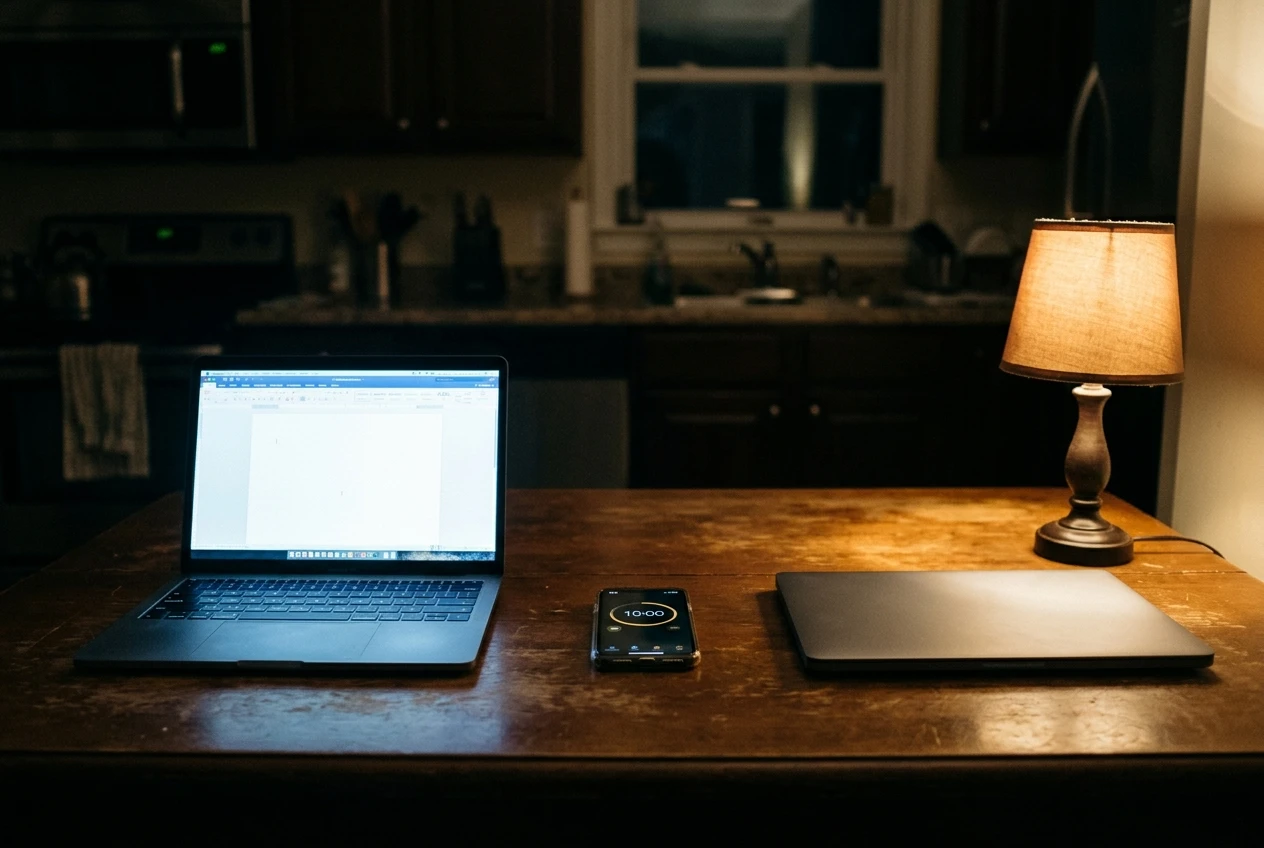
- Tiny night: Your kid is resting but needs checking, or you are tired but can still sit and tap a screen. Do the 10-minute minimum described below, then stop.
- No night: Your kid is really unwell, you are worried, or you can barely keep your eyes open. Skip the site completely and go to bed as soon as you can.
If you cannot decide in 30 seconds, choose the tiny night. If ten minutes still feels like too much once you sit down, switch to no night. Choosing no night is part of the plan, and it does not count as a failure.
The 10-minute minimum night
The minimum night has one task, one timer and one stopping point. Set a timer for ten minutes, work on a single small thing, and put the laptop or phone down when it rings. You can stop earlier if you finish.
Anything counts as showing up if it fits one of two descriptions: it moves the site forward by one small item, or it captures something for later. Opening your site, fixing a typo and saving one idea in your notes all qualify.
The reason to keep any version of the habit on a bad night is practical. If you open your site on a hard night, the next normal night starts with something familiar. If you drop it for ten days, the first night back takes extra effort.
Choose your usual minimum task ahead of time, on a day when you feel fine. At 10pm with a feverish kid, you should be picking from a list you already made, not inventing one.
Five low-energy website tasks you can do from the couch with a feverish kid beside you
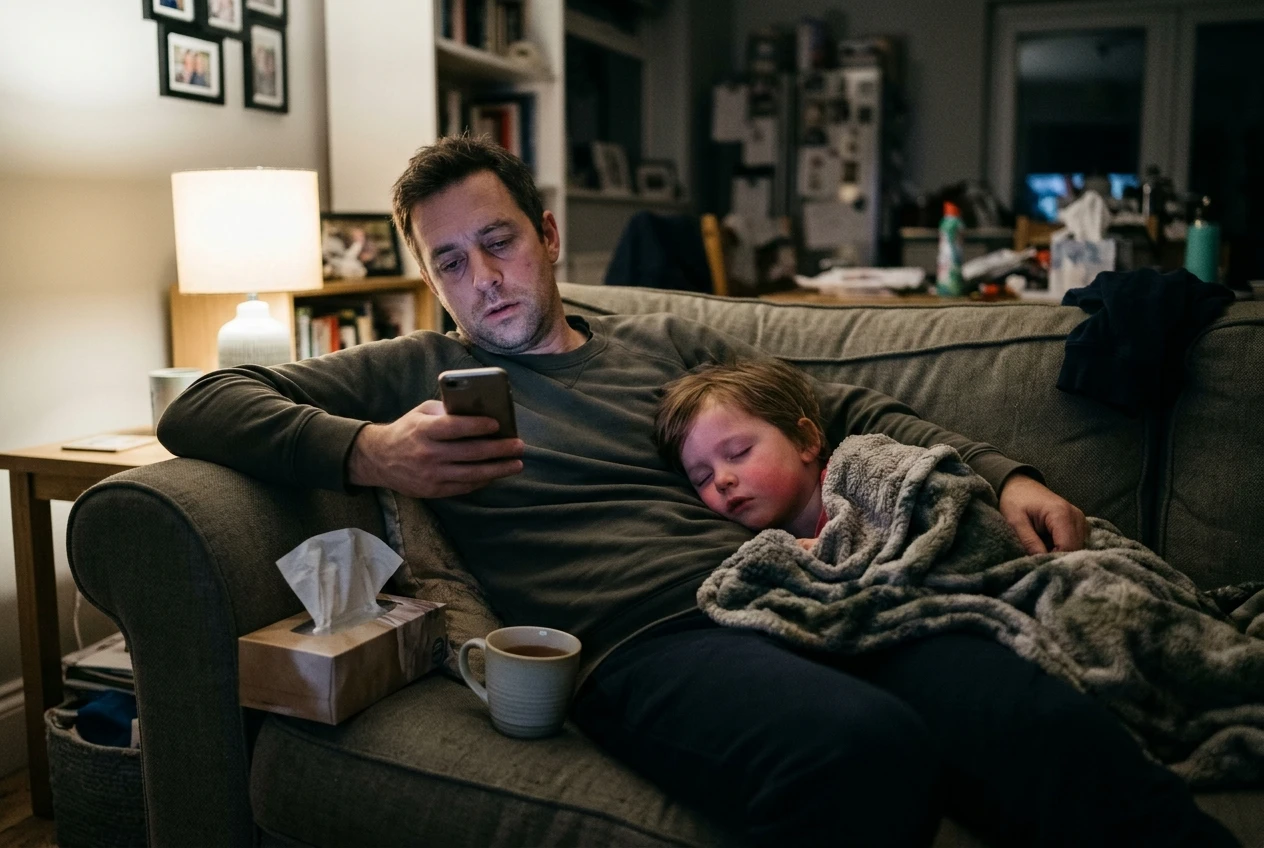
Each of these works on a phone or a laptop balanced on your knees, and none needs focus or creativity.
- Reread your last published post and fix what you find. Look for typos, a clumsy sentence or a title that could be clearer. It takes about ten minutes and the site improves.
- Write five possible titles for your next post. You are not choosing one. Dump five options into a note and leave them there.
- Check your site on your phone. Load the home page and your newest post, tap the menu, and see whether everything opens and reads properly. If something looks off, write it down.
- Add one internal link between two posts you have already published. Pick a sentence in one post that mentions the topic of another, and link it. This helps readers move through your site.
- Jot a rough outline of your next post. Five or six bullet points are enough, with no full sentences needed.
If none of these appeals, that is a sign it is a no-night night.
Use the sick days to collect, not create
Creating takes energy and a clear head, and collecting needs neither. A sick-kid week is a good time to collect, because you are awake at odd hours with a phone in your hand anyway.
Keep a single note on your phone. Whenever something crosses your mind that a reader might want to know, add one line. That could be a question you caught yourself asking, something you wished you had known earlier in the week, or an idea for a post. Do not sort, research or expand any of it.
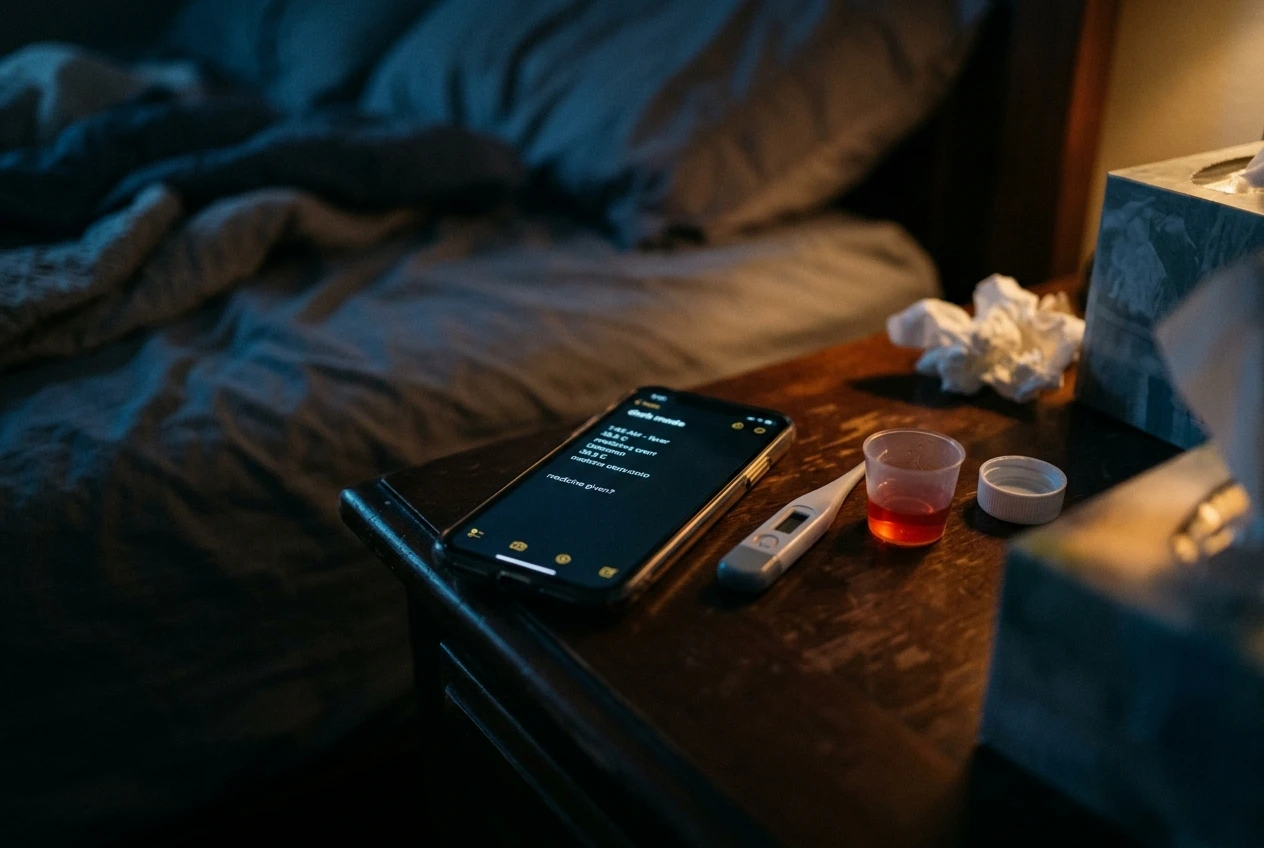
The method is the same one covered in how to capture a week of content ideas without touching your website at work. It works just as well from a couch at 2am as from a desk at lunch.
By the end of the week you will have a list that would have taken real effort to produce on a normal night. Sorting it later takes about ten minutes, and the sick days will have produced something useful after all.
Getting back on track after the week ends without a guilt catch-up marathon
Once your kid is better, the temptation is to make up the lost hours with a three-hour night or a long weekend session. That plan tends to fail. It borrows sleep you probably have not recovered yet, and it makes the next ordinary night look like a letdown by comparison.
The missed hours are not owed to anyone. Pick the next night when things are calm and run your normal plan from where you left off.
A short reset helps:
- Open your notes from the week and choose the one idea that interests you most.
- Look at your list of titles or outline, if you made them, and pick the next post to write.
- Put your next full night on the calendar so it is a decision, not a hope.
If the illness ran longer than a week, or it passed through the whole house, ease in. Do a tiny night first, then a full night. Your routine does not need to return at full size on day one.
Afterward, update your minimum task list while the week is fresh. Note what you actually did on the hard nights and what you could not manage, and adjust the list. Another sick week will come eventually, and next time the plan will fit better.
What to say to yourself at 11pm when you’re exhausted and behind
At that hour you are tired, probably behind on sleep, and tempted to count everything you did not get done. A few plain statements are more useful than encouragement:
- “Tonight is a tiny night or a no night, and both are part of the plan.”
- “The site is exactly where I left it, and it will be there tomorrow.”
- “My kid getting better comes first, and the site can wait.”
- “Ten minutes, then bed.”
If you are short on sleep, going to bed is the most useful thing you can do for the site, because your next full night will be better for it.
Building a side income as a parent with a full-time job works best when the routine can shrink on hard weeks and grow again afterward. The Wealthy Affiliate starter option is a straightforward way to set up a simple, low-pressure routine of this kind, one you can scale down when life gets loud. When things settle, the 60-minute night-by-night plan shows you how to use your full evenings.
Leave a Reply